
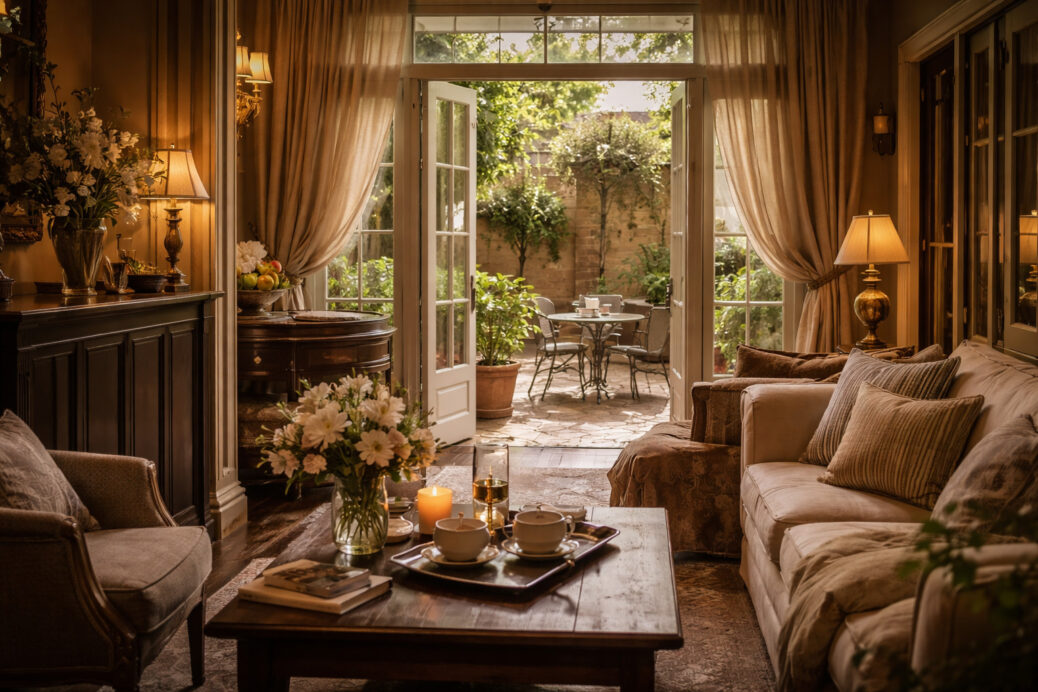
Some of the most memorable stays are not the grandest ones, but the ones that feel scaled to human life.
The Appeal of a Smaller Scale
Luxury once leaned heavily on size. Bigger lobbies, more rooms, longer corridors, and a sense of theatrical scale were all seen as signs of prestige. Yet in recent years, many travelers have begun to move in the opposite direction. They are choosing smaller boutique properties, especially townhouse hotels, because intimacy now feels more valuable than grandeur. A stay with twenty thoughtfully designed rooms can leave a deeper impression than a property with two hundred.
The reason is simple: smaller spaces tend to hold atmosphere more effectively. They feel quieter, more coherent, and less dependent on polished performance. In a townhouse hotel, the guest often moves through rooms that still carry the proportions of domestic life. Staircases are narrower, light falls more softly, and shared spaces feel lived in rather than engineered for maximum throughput.
“A great townhouse hotel does not feel like a machine for hospitality. It feels like a private world that happens to welcome you in.”
Design That Feels Lived In
The best townhouse hotels understand that design should never feel overworked. They often rely on texture, proportion, and character rather than spectacle. Original floorboards, a slightly creaking stair, a library lounge, a breakfast room that feels like a private dining room — these are not flaws to be corrected, but qualities that make a stay memorable. They invite a guest to settle in rather than simply pass through.
At their best, these properties respect the building they inhabit. They allow history to remain visible while refining it through contemporary comfort. That balance is difficult to achieve, but when it works, a townhouse hotel can feel both deeply rooted and completely current. It offers a story through walls, windows, and room proportions, not just through branding.
Service Without Performance
Smaller stays also tend to recalibrate the relationship between guest and service. In a large hotel, efficiency often becomes the dominant language. In a townhouse hotel, there is more room for warmth, recognition, and ease. Staff are more likely to remember how you take your coffee, which corner you gravitate toward, or whether you prefer breakfast early and quietly. These are tiny things, but they shape how personal a stay feels.
Crucially, the best service in this setting never feels overbearing. It feels observant rather than performative. That distinction matters. Travelers increasingly want hospitality that supports their rhythm instead of staging itself too obviously around them. A smaller property, by nature, is often better suited to that softer approach.
Why They Stay in the Memory
We tend to remember places that feel specific. Townhouse hotels are often more memorable precisely because they cannot be replicated so easily. Their rooms are irregular, their common spaces are shaped by the building rather than by a template, and their atmosphere belongs to one address rather than a concept that could be reproduced anywhere. That sense of singularity is increasingly rare.
In the end, the return of the townhouse hotel says something larger about how people want to travel now. They are seeking properties that feel quieter, more personal, and more rooted in place. Not because they reject luxury, but because they have grown more precise about what luxury actually means. Often, it means less scale, more character, and a stay that feels as though it could belong nowhere else.